No-Code Workflow Automation
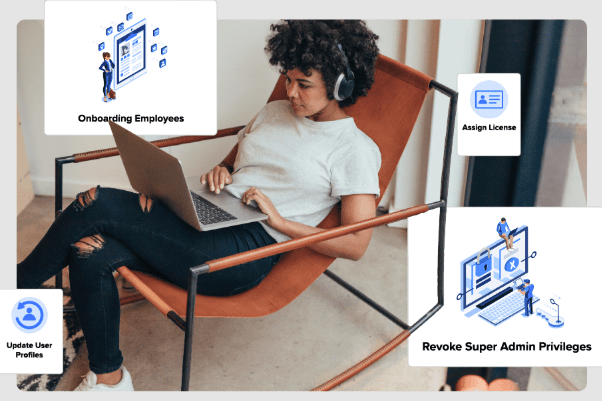
No-code workflow automation enables teams to design and run processes without traditional coding. Visual, drag-and-drop tools model, test, and deploy workflows quickly, reducing dependence on developers. It offers transparency, speed, and scalable governance, aligning tasks with clear roles and guardrails. By enabling autonomous operation, it supports rapid tooling and iterative improvement. The approach promises measurable gains, but choosing the right platform and building initial end-to-end workflows will reveal where resistance and opportunity lie.
What No-Code Workflow Automation Is (And Why It Matters)
No-Code Workflow Automation enables software workflows to be designed and executed without traditional programming. The approach harnesses no code tools to model, test, and deploy processes, reducing cycle times and dependence on developers.
Its relevance lies in transparency, speed, and scalability, allowing teams to orchestrate tasks as a cohesive system. Workflow automation clarifies roles, improves accuracy, and empowers autonomous operation.
How to Choose the Right No-Code Platform for Your Team
Choosing the right no-code platform hinges on aligning capabilities with team needs: assess governance, integration options, and scalability to ensure rapid tooling without sacrificing control. A Readiness Assessment identifies Choosing Platform feasibility, governance maturity, and data handling. Analyze Feature Gaps to avoid missed functionality, and evaluate Security posture to protect assets while enabling autonomous teams, with transparent, auditable decisions.
Build Your First End-to-End Workflow in Under an Hour
A practical, end-to-end workflow can be assembled in under an hour by mapping a simple trigger to a clear sequence of automated steps, then validating each stage for reliability.
The approach emphasizes automation onboarding and lightweight governance, enabling rapid deployment while preserving data integrity.
Designers specify roles, guardrails, and approvals, ensuring freedom to iterate without compromising data governance principles.
Measure Success and Iterate: Metrics, Troubleshooting, and Next Steps
How can teams determine the impact of their automated workflows and drive continuous improvement? The measure succeeds through a metrics review that tracks throughput, error rates, and cycle time, revealing bottlenecks.
An explicit iteration strategy guides rapid testing, documented changes, and rollback readiness. Troubleshooting diagnoses issues quickly, while next steps align automation goals with evolving business needs and user freedom. Continuous optimization remains essential.
Frequently Asked Questions
How Secure Is No-Code Workflow Automation for Sensitive Data?
No code security depends on implementation; competent providers enforce strong encryption, access controls, and compliance. They isolate sensitive data, audit trails, and vulnerability management, enabling trusted automation while preserving freedom to innovate, though residual risk requires governance and reviews.
Can No-Code Tools Integrate With Legacy On-Prem Systems?
Integration challenges arise, but no-code tools can connect with legacy on-prem systems through on-prem connectivity, data mapping, and middleware. They support legacy integration workflows, yet caution is advised around security, governance, and performance impacts for freedom-seeking teams.
What Are Hidden Costs in No-Code Platforms?
Whispers of hidden costs emerge as platform licensing, integration timing, and customization limits shape outcomes; the evaluation reveals trade-offs, where automation freedom clashes with budgeted constraints, guiding decisions toward scalable, transparent, and bounded no-code implementations.
How Do I Handle Data Governance and Compliance?
Data governance and compliance are addressed by defining data lineage and implementing access controls; automation enforces policies, monitors changes, and logs audits, enabling scalable, freedom-oriented operations while maintaining transparency, accountability, and risk mitigation across all integrated systems.
See also: asisnews
What Best Practices Prevent Bottlenecks and Tech Debt?
Bottleneck prevention and debt mitigation are achieved through standardized pipelines, proactive monitoring, and modular components. The approach emphasizes automation, clear ownership, incremental changes, strategic reuse, and continuous refactoring to sustain freedom while controlling complexity and risk.
Conclusion
No-code workflow automation scales team capability without coding bottlenecks. It standardizes processes, speeds delivery, and tightens governance through visible, reusable components. Anecdote: a marketing team cut campaign handoffs from 12 to 2 steps, like a well-tuned relay race, delivering faster with fewer drops. Data shows deployment times drop by up to 80% when visual tools replace scripts. The approach remains automation-first: design, test, deploy, monitor, and iterate with clear ownership and guardrails.