How High Voltage Power Supply Works in X-Ray Tube Systems
X-ray systems are widely used across industries such as manufacturing, security inspection, medical imaging, and electronics testing. These systems depend on highly controlled energy conversion processes to generate accurate and reliable imaging results. At the center of this entire mechanism lies a critical electrical unit responsible for producing the required energy for X-ray generation.
The performance of any X-ray system is strongly influenced by the stability and precision of the electrical input delivered to the tube. This is where the high voltage power supply for X ray tube becomes essential, as it ensures controlled energy delivery for consistent radiation output. Without it, image quality, penetration accuracy, and system reliability would be severely compromised.
What is a High Voltage Power Supply in X-Ray Tube Systems
A high-voltage power supply is an advanced electronic system designed to convert standard low-voltage electrical input into extremely high voltage levels required for X-ray production. Depending on application requirements, this voltage can range from a few tens of kilovolts to several hundred kilovolts.
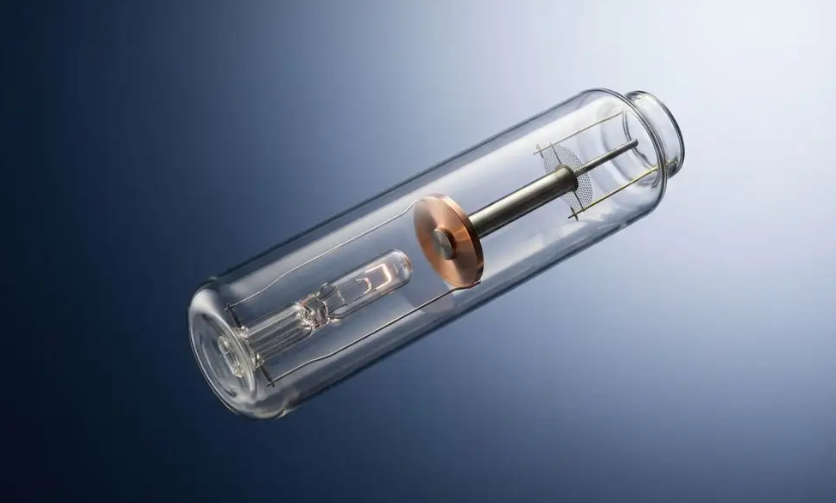
Inside an X-ray tube, electrons must be accelerated at extremely high speeds from the cathode toward the anode. This acceleration is only possible when a strong and stable electric field is applied. The high-voltage power supply for the X-ray tube ensures that this field remains stable and precisely regulated at all times.
Even small variations in voltage or current can lead to inconsistent radiation intensity, reduced image clarity, or incorrect inspection results. Therefore, voltage stability is one of the most important parameters in X-ray system design.
Working Principle of High Voltage Generation
The working principle of a high-voltage system involves controlled energy conversion through multiple stages of electrical transformation. It starts with AC power from the main supply, which is converted into DC using a rectifier circuit. The DC is then sent to a high-frequency inverter that switches rapidly to improve efficiency and reduce system size.
Next, a high-voltage transformer increases the voltage while providing electrical isolation for safety. The output is again rectified and filtered to create a stable DC. This is supplied to the X-ray tube electrodes for electron acceleration. The high-voltage power supply for the X-ray tube ensures precise voltage and current control.
See also: Object Detection Technology
Key Components of a High-Voltage X-Ray Power System
Input Rectifier Stage
This stage converts alternating current into direct current. It forms the foundation of the energy conversion process.
High-Frequency Inverter
This component converts DC into high-frequency AC, enabling efficient voltage transformation with reduced energy loss and compact system design.
High Voltage Transformer
The transformer increases voltage to the required kilovolt range while maintaining electrical isolation between input and output circuits.
Rectification and Filtering Unit
This stage converts high-frequency AC back into stable DC and removes electrical ripples for smooth output.
Control and Feedback System
This intelligent system continuously monitors voltage, current, temperature, and operational stability. It adjusts parameters in real time to ensure consistent output and prevent system failure.
Each of these components plays a crucial role in ensuring the safe, stable, and efficient operation of the X-ray system.
Step-by-Step Operation of an X-Ray Power System
The operation begins when electrical energy is supplied from the main source. This energy is first rectified into DC power and then passed to the inverter stage. The inverter converts DC into high-frequency AC, which is then fed into a high-voltage transformer.
The transformer increases the voltage to the required level for X-ray production. The output is then rectified and filtered to remove fluctuations, producing stable high-voltage DC. This regulated energy is supplied to the X-ray tube. Once the high-voltage power supply for the X-ray tube delivers controlled energy, electrons are emitted from the cathode. producing precise diagnostic X-rays
Role of High Voltage Stability in Image Quality
Stability in high-voltage systems directly affects image clarity and accuracy. If the voltage fluctuates, the energy level of X-rays changes, resulting in inconsistent penetration through materials.
Stable voltage ensures uniform radiation output, which is essential for detecting fine defects in industrial components or capturing accurate medical images. Similarly, stable current ensures consistent brightness and exposure levels.
The high-voltage power supply for the X-ray tube plays a critical role in maintaining this stability. It ensures that both voltage and current remain within precise limits, even under varying load conditions.
Applications of High Voltage X-Ray Systems
Industrial Non-Destructive Testing
Used for detecting internal cracks, weld defects, voids, and structural inconsistencies without damaging materials.
Food Inspection Systems
Helps identify foreign objects such as metal, glass, or dense contaminants in packaged food products.
Security Screening Systems
Widely used in baggage inspection, cargo scanning, and vehicle security checkpoints.
Medical Imaging Systems
Supports diagnostic imaging, dental scanning, and bone density analysis with high precision.
Electronics Manufacturing
Used for inspecting circuit boards, solder joints, and microelectronic components where precision is critical.
Each of these applications relies heavily on stable voltage control for accurate imaging results and operational reliability.
Safety Mechanisms and Design Considerations
High-voltage X-ray systems operate under extreme electrical conditions, making safety a top priority. Proper insulation, grounding, and shielding are essential to prevent electrical hazards and radiation leakage.
Modern systems are designed with multiple protection layers, including overload protection, thermal monitoring, arc detection, and automatic shutdown systems. These mechanisms ensure safe operation under all conditions.
The reliability of a high-voltage power supply for an X-ray tube directly affects both system safety and performance. Any instability can result in equipment damage, inaccurate imaging, or operational risks, making precision engineering essential.
Conclusion
High-voltage systems are essential for precise and reliable X-ray generation across industrial, medical, and security applications. Stable energy control ensures accurate imaging, consistent radiation output, and safe operation. The high voltage power supply for X ray tube plays a critical role in maintaining performance efficiency, making it a core component in modern advanced X-ray inspection and diagnostic technologies.
Leading global innovation in X-ray and high-voltage technologies, VJ X-Ray is a specialized engineering company designing and manufacturing advanced X-ray sources and high-voltage generator systems for industrial, security, and medical applications. VJ X-Ray OEM solutionsfocus on precision, stability, and long-term reliability in demanding environments. With strong expertise in high-voltage technology, VJ X-Ray delivers integrated systems that support non-destructive testing, inspection, and imaging needs, ensuring accurate performance, improved efficiency, and dependable operation across global industries.